Apex Legends ESP and Radar: How to Climb Ranked on Information
Loot ESP rarity filters, radar height arrows and third-party detection explained, with the Apex Legends ESP setup that wins ranked on rotations instead of aim.
By Darkservices Team
You land Fragment, win the first fight, and die eleven seconds later to a squad that heard it. Your aim was fine. Your third-party read was not.
Ranked Apex punishes information gaps harder than it punishes mechanics. A Predator player and a Diamond player often shoot about as well. The Predator knows which squads sit within rotation distance, which ring pull forces a fight, and which death box holds the armour swap that decides the next engagement.
This guide covers the information layer: Loot ESP, radar and player visuals, and how to configure them for ranked rather than for a highlight clip. If you want the product comparison, our Apex Legends cheats buyer's guide handles that.
Ranked rewards routing, not kills
Placement points do most of the work in a ranked climb. A squad that lands quiet, loots efficiently and reaches ring three with full purple armour scores more across twenty games than a squad farming Fragment for early knocks.
Information serves that goal in three specific ways. Loot ESP shortens the time between landing and combat readiness. Radar tells you which fights you can skip. Player visuals tell you whether a fight you cannot skip is worth committing to.
Aim assistance sits underneath all of it and matters least. You will lose more ranked points to a bad rotate than to a missed shot.
Loot ESP: filter first, look second
Turning on every loot category produces a screen that reads like a slot machine. The filter does the work.
Set a minimum rarity. Below purple, most of what you see costs you more time than it returns. Blue armour is a placeholder you replace within ten minutes. Filtering to purple and above turns your screen from noise into a route.
Prioritise by what actually decides fights. Armour, batteries and ammo for the two weapons you run. Stabilised optics if you play ranged. Everything else is a detour.
Use draw distance as a routing tool. Short distance inside a stacked POI keeps your screen readable while you clear buildings. Long distance while rotating shows you which compound holds the armour swap before you commit to crossing open ground.
Death boxes deserve their own treatment. A box from a fight you did not take tells you two things: a squad died here, and the squad that killed them is nearby with better loot than you. Reading boxes as a threat signal rather than a shopping list changes how you approach a quiet POI.
Care packages work the same way. The package is loot and bait in equal measure, and knowing what sits inside before you cross tells you whether the risk pays.
Radar wins the rotate
The radar answers the question that decides most ranked games: can we take this ring, or do we need to leave now?
Height arrows matter more than position on most maps. A squad forty metres away and thirty metres above you on Olympus is a different problem to one at your level. Height tells you whether you are about to get pushed or dropped on.
Rotate the radar to your facing. A fixed-north radar forces a translation step every time you check it, and that step costs you the half-second you were trying to save.
Position and size are personal. Put it where your eyes already travel. Most players settle on a small radar near the crosshair rather than a large one in a corner they never look at.
The habit worth building: check radar before you take a fight, not during. A fight you enter knowing two other squads sit within rotation distance is a fight you take differently, or skip.
Player visuals: read the fight before you commit
Box and corner box show position. Skeleton shows which way the body faces, which tells you whether a target has clocked you.
Glow with a visibility check separates targets you can hit from targets behind geometry. Without that check you commit to shots that never land, and worse, you commit to fights against a squad you cannot actually reach.
Shield and health readings decide the commit. A team at forty health with white shields is a fight. The same team behind purple armour with a Lifeline down is a rotate.
The discipline is the same as everywhere else in this hobby: leave off what you will not use. Names and weapon labels sound useful and turn into visual clutter you parse instead of playing.
Aim settings for a game with travel time
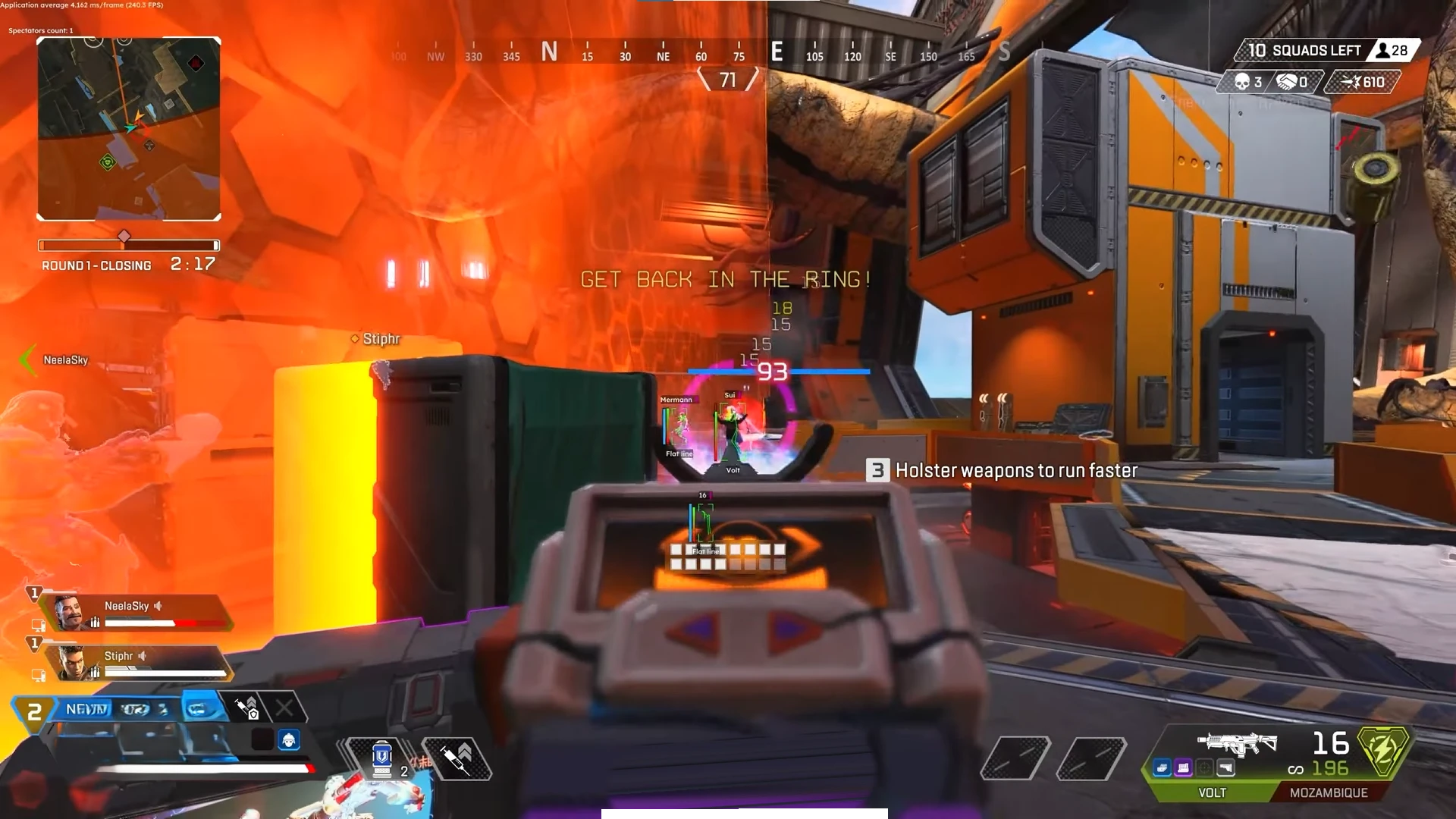
Apex bullets travel and drop. That changes how aim assistance behaves compared to a hitscan game.
Prediction handles the travel. Without it, assistance tracks where a target stands rather than where the target will be, and every shot at range lands behind a moving player.
Adjustable FOV should stay narrow. Apex fights involve more moving bodies than most shooters, and a wide cone pulls you between targets during a third party.
Visible checks stop you tracking through geometry. A lock that follows a player behind a rock produces motion no human makes.
Bone selection favours chest. Apex armour means body shots carry the fight anyway, and chest priority survives a spectator far better than permanent head tracking.
Movement matters more in Apex than in tactical shooters. Assistance that fights your slides and zipline repositions costs you more than it gives, so set smoothing high enough that your own movement still feels like yours.
Squad play changes the calculus
Solo queue and premade squads use this information differently.
Alone, the information keeps you out of fights your randoms want to take. You cannot stop a teammate pushing, but you can position for the third party you know is coming.
In a premade, callouts carry the value. A radar read announced early gives your squad three seconds to reposition, which decides more rounds than any individual duel. Say the height, say the distance, and keep the call short.
Ricochet, bans and account risk
Respawn runs Easy Anti-Cheat on Apex, and unauthorised software can end in a permanent ban. No configuration removes that risk, and any seller claiming otherwise is describing a status rather than a guarantee.
If the ban attaches to your machine instead of your account, new accounts keep dying shortly after they connect. That is a hardware ban. Our HWID spoofer covers Easy Anti-Cheat, and it sits separate from any Apex licence rather than bundled into one.
The product
Darkservices lists one Apex package:
| Product | Starting price |
|---|---|
| Apex Full | From $4.99 |
Aimbot with adjustable FOV, prediction, bone selection and visible checks. Player visuals with box, corner box, skeleton and glow. Loot ESP with a minimum rarity filter across cash, ammo, weapons, boxes, grenades and medical. Radar with enemy and teammate display, rotation, height arrows and position config.
Confirm licence length and current status on the live listing before checkout. The Apex Legends cheats page carries the full feature breakdown.
FAQ
What rarity should I filter Loot ESP to?
Purple and above for most ranked games. Blue armour and white attachments cost you more screen time than they return, and you replace them within the first two rings anyway.
Does radar show squads through buildings?
Radar reports position and height regardless of what sits between you. The value comes from rotation planning rather than from fights, since a squad two floors above you changes your approach before you ever see them.
Why does my aim assistance miss at range in Apex?
Apex bullets travel and drop, so assistance without prediction tracks where a target stands rather than where the target will be. Enable prediction and expect longer shots to still need your own lead on fast-moving targets.
Is ESP more useful than aimbot for climbing ranked?
For most players, yes. Ranked points come from placement, and placement comes from rotations you survive. Information changes which fights you take. Aim assistance only changes how the fights you already took resolve.
Will this work in Ranked and Arenas both?
The feature set applies across modes. Ranked rewards the information layer more heavily because placement scores, while shorter modes lean on the aim layer.
How do I keep my screen readable in a stacked POI?
Cut draw distance and raise your rarity filter before you drop hot. A short-range, high-rarity filter turns Fragment from a wall of icons into three or four things worth walking to.
Where to start
Drop the rarity filter to purple, set radar to rotate with your facing, and turn player visuals down to box, skeleton and glow with a visibility check. Play five ranked games without touching the menu.
Watch which information you actually used. Turn off the rest.
Most players find they use three elements and ignore nine. Building the config around those three is what turns a busy screen into a ranked climb. Current stock and licence options sit on the Apex Legends cheats page, and support answers setup questions before you buy.